
30-sec preview
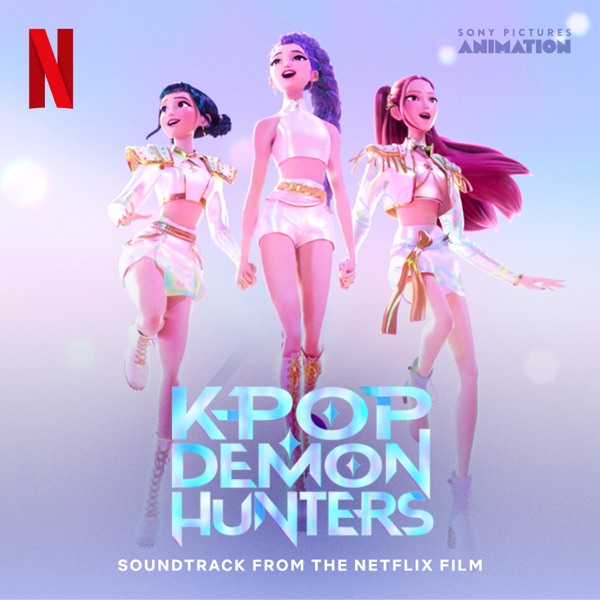
2025 · From the album KPop Demon Hunters (Soundtrack from the Netflix Film)
Soda Pop
by HUNTR/X, EJAE, AUDREY NUNA, REI AMI & KPop Demon Hunters Cast
02 · Interpretation
"Soda Pop": The Sweetest Thing That'll Still Get You
Have you ever found yourself bobbing your head to a catchy tune, only to realize you have no idea what the artist is actually saying? That is exactly the kind of song that pulls you in and keeps you hooked. The Soda Pop lyrics by Saja Boys are a perfect example of this. On the surface, it sounds like a fun, breezy track, but dig a little deeper and there is so much more going on beneath those playful words.
Whether you stumbled across this song on social media or heard it through a friend, you are probably here because you want to truly understand what Saja Boys are expressing. And honestly, that is one of the best parts of exploring music from different cultures and languages.
In this post, we are going to break down the Soda Pop lyrics in a way that is easy to follow, even if you are completely new to analyzing song meanings. We will cover the translation, explore the hidden subtext, and unpack the deeper themes the artists wove into the track. Let's get into it!
What Is Soda Pop and Who Are the Saja Boys?
If you've been scrolling through TikTok or Netflix recently, you've probably stumbled across "Soda Pop," the infectious track that seems to be everywhere right now. But before we dig into the lyrics, let's cover the basics of what this song actually is and where it comes from.
"Soda Pop" was officially released on June 19, 2025, as part of the KPop Demon Hunters (KPDH) Original Soundtrack on Netflix. The track is credited to the Saja Boys alongside a team of producers and collaborators, and it was backed by Sony Pictures Animation with an official lyric video release. You can check out a full Saja Boys Soda Pop lyrics translation to follow along with both the Korean and English portions of the song.
So who exactly are the Saja Boys? They are a fictional K-pop group living inside the world of KPDH, portrayed as five charismatic demons named Jinu, Mystery, Romance, Abby, and Baby. Within the show's story, these five demons use pop music as a literal weapon; they perform catchy songs to lure unsuspecting humans and consume their souls. That makes "Soda Pop" a classic villain song hiding in plain sight, wrapped in bubbly, radio-friendly packaging.
The song is also bilingual, mixing Korean verses with English hooks, which is a signature trait of mainstream K-pop production. That blend is a big reason why Western Netflix audiences have been searching so actively for translations and breakdowns. You can even find a popular Saja Boys Soda Pop lyrics video that lays out the full track for easy listening.
Fan consensus is pretty clear: across TikTok and Instagram, audiences consistently call "Soda Pop" the most successful track on the entire KPDH soundtrack, with many viewers describing it as "so corporate, yet catchy, 10/10 exactly as intended." That reaction is not accidental. It is the whole point.
Soda Pop Full Lyrics: Korean and English Side by Side
Now that you know the story behind the Saja Boys, let's get into the actual words they're singing. This is the part fans have been hunting for across the internet, because surprisingly, no major music platform has published a clean, complete, verified bilingual version of these lyrics. Consider this your go-to reference.
The song follows a clear structure: intro, verse 1, verse 2, pre-chorus, chorus, and bridge. Each section blends Korean and English in that signature K-pop style, which is exactly what makes it so fun to sing along to and so tricky to fully understand without a translation.
Verse 1 (Jinu)
| Korean (Hangul) | Romanization | English |
|---|---|---|
| Hey hey / Hey hey / Hey | Hey hey / Hey hey / Hey | Hey hey / Hey hey / Hey |
| (English) Don't want you, need you | Don't want you, need you | Don't want you, need you |
| 마시고 마셔 봐도, 성에 차지 않아 | Masigo masyeo bwado, seong-e chaji ana | I drink and drink but I don't feel satisfied |
| Got a feeling that, oh yeah | Got a feeling that, oh yeah | Got a feeling that, oh yeah |
| You could be everything that I need | You could be everything that I need | You could be everything that I need |
| Taste so sweet | Taste so sweet | Taste so sweet |
| Every sip makes me want more, yeah | Every sip makes me want more, yeah | Every sip makes me want more, yeah |
Already in verse 1, you can spot something interesting. The Korean line "마시고 마셔 봐도, 성에 차지 않아" carries a frustrated, almost restless energy, like someone who has tried everything and still feels hollow. But when the song pivots to the English "every sip makes me want more," that same feeling suddenly sounds flirtatious and fun. Same emotion, very different vibe. That gap is one of the biggest discussion points in fan communities right now.
Verse 2 (Mystery, Romance, Abby)
| Korean (Hangul) | Romanization | English |
|---|---|---|
| (English) Looking like snacks 'cause you got it like that | Looking like snacks 'cause you got it like that | Looking like snacks 'cause you got it like that |
| Take a big bite, want another bite, yeah | Take a big bite, want another bite, yeah | Take a big bite, want another bite, yeah |
| 너의 모든 걸 난 원해, 원해, 원해 | Neoui modeun geol nan wonhae, wonhae, wonhae | I want everything about you, want it, want it, want it |
| 너 말곤 모두 뻔해, 뻔해, 뻔해 | Neo malkon modu ppeonhae, ppeonhae, ppeonhae | Everyone else is so predictable, predictable, predictable |
| When you're in my arms, I hold you so tight | When you're in my arms, I hold you so tight | When you're in my arms, I hold you so tight |
| Can't let go, no, no, not tonight | Can't let go, no, no, not tonight | Can't let go, no, no, not tonight |
Pay close attention to "원해, 원해, 원해." The triple repetition in Korean hits differently than the English translation suggests. In Korean, that repetition sounds urgent and consuming, closer to obsession than affection. The English "I want everything about you" reads sweet and romantic. The original? Not so much.
Pre-Chorus (All Members)
| Korean (Hangul) | Romanization | English |
|---|---|---|
| 지금 당장 날 봐, 시간 없잖아 | Jigeum dangjang nal bwa, sigan eopjana | Look at me right now, there's no time |
| 넌 내꺼야 이미, 알고 있잖아 | Neon naekkeoya imi, algo itjana | You're already mine, you know that |
| 'Cause I need you to need me | 'Cause I need you to need me | 'Cause I need you to need me |
| I'm empty, you feed me so refreshing | I'm empty, you feed me so refreshing | I'm empty, you feed me so refreshing |
| My little soda pop | My little soda pop | My little soda pop |
This is where the song's double meaning becomes impossible to ignore. "넌 내꺼야 이미" uses the Korean word "내꺼야," which is a casual, blunt way of saying "you're mine." It carries an entitled, possessive edge that the English translation softens significantly. And then, immediately after that line, the demons drop the English endearment "my little soda pop," which sounds adorable while the Korean line before it was asserting ownership. That contrast is deliberate and chilling once you notice it.
Chorus (All Members)
| Korean / English | Translation |
|---|---|
| You're all I can think of | You're all I can think of |
| Every drop I drink up | Every drop I drink up |
| You're my soda pop / My little soda pop | You're my soda pop / My little soda pop |
| Cool me down, you're so hot | Cool me down, you're so hot |
| Pour me up, I won't stop | Pour me up, I won't stop |
Bridge (All Members, Fully in English)
"Uh, make me wanna flip the top / In one sip, you hit the spot / Every little drip and drop, fizz and pop, ah / Gives me chills, it's gettin' hot / Yes, I'm sippin' when it's drippin' now / It's done? I need a second round / And pour a lot and don't you stop / 'Til my soda pop fizzles out"
The bridge is delivered entirely in English, which makes it instantly singable for Western listeners but also places the most explicitly predatory imagery in the most accessible part of the song. "I need a second round" and "don't you stop 'til my soda pop fizzles out" sound like party lyrics until you remember who is singing them and why. For a deeper breakdown of what all of this actually means within the story, the K-Pop Demon Hunters fan community on Facebook has been actively discussing the lyrics, though fans have noted that some fan transcriptions circulating online contain errors or missing sections, which is exactly why having a verified, organized source like this one matters.
Breaking Down the Hidden Meaning: Verse by Verse
Now that you have the full lyrics in front of you, it's time to look at what the Saja Boys are actually saying underneath all that catchy pop packaging. This is where things get genuinely clever, and honestly a little unsettling once you see it.
The Sweet Surface: Romance and Addiction
On the first listen, "Soda Pop" reads like a pretty standard love song about obsession. The beverage metaphors do all the heavy lifting here. Lines like "my little soda pop" and "every sip makes me want more" paint the narrator as someone completely infatuated, unable to get enough of the person they're singing about. It feels bubbly, fun, and harmlessly over-the-top, which is exactly the point. The addiction framing works because it's so familiar. We've heard countless pop songs compare love to a drug or a craving, so your brain just files this one into that same category without questioning it. That automatic categorization is a big part of why the deeper meaning hits so hard once you catch it.
The Predatory Layer Hiding in Plain Sight
Here's where the lyrics flip the script in a way that's genuinely unsettling. Phrases like "you feed me" and "I'm empty" don't sound like a lovesick person anymore when you think about them carefully. They reframe the narrator as something that consumes rather than something that desires. A lovesick admirer wants to be close to someone; a predator needs to extract something from them. In the context of the show's lore, where the Saja Boys are literal demons who feed on human souls, these word choices stop being poetic and start being descriptive. The writers weren't being subtle; they were hiding the truth in the most obvious place possible, knowing most listeners would scroll right past it.
The Chorus as a Trap
The chorus is the most strategically written section of the whole song. The repeated sweetness imagery, words like "fizzy," "bubbly," and "addictive," mirrors exactly how the Saja Boys operate within the show. They present themselves as irresistible pop idols, all charm and sparkle, and the chorus performs that very seduction in real time. You're experiencing the trap while listening to a song about the trap. Fans on the r/KpopDemonhunters Reddit thread have described this as the song "doing the thing it's singing about," which is a pretty perfect way to put it.
The Bridge Changes Everything
By the time the bridge arrives, the lyrical tone shifts noticeably. The language becomes more urgent, more desperate, with a sense of finality creeping in. In a straightforward romance, that would signal a passionate climax. Within the show's context, it signals something much darker: the moment just before a soul is fully consumed. The bridge is essentially the point of no return dressed up in pop-song clothes, and it works because the emotional intensity feels earned after everything that came before it.
This double-meaning structure is clearly resonating with audiences far beyond just hardcore fans of the show. TikTok creator @jarredjermaine posted a reaction-style breakdown revealing exactly this layered reading, and it accumulated 546,400 views as of mid-2026. That number confirms something important: the hidden meaning angle isn't a niche theory. It is the dominant reason people are searching for these lyrics in the first place. When a song makes you feel something without you quite knowing why, the next instinct is always to figure out what you missed.
Why Soda Pop Is a Villain Song Disguised as a Pop Bop
Here's where "Soda Pop" gets genuinely fascinating, especially if you love pulling apart the way storytelling works. Fans across TikTok and Reddit have started comparing this song directly to "Love is an Open Door" from Frozen, and once you hear that comparison, you can't unhear it. In Frozen, that cheerful duet feels like a sweet romantic moment, and the audience falls for it completely, only to discover later that Hans was manipulating Anna the entire time. "Soda Pop" operates on exactly the same principle. The Saja Boys sound warm, fun, and totally irresistible, which is precisely the point.
What makes both songs so effective as narrative tricks is that they are genuinely, unashamedly good. They are not campy or winking at the audience. The music is engineered to work on you emotionally before your brain catches up, and that gap between how a song feels and what it actually means is where the real horror lives. Sound designer Michael Babcock, who crafted the KPDH audio, specifically described "Soda Pop" as being full of clever, sparkly sonic flourishes that reflect K-pop's signature sheen. This was not an accident. The creative team built a song that could stand on its own in any real-world playlist.
That brings up one of the most interesting things about this track: the fourth wall effect. Usually, when a movie features a fictional pop group, the music sounds slightly artificial or over-the-top so that audiences can keep their distance. KPDH did the opposite. Songwriter EJAE brought genuine K-pop industry experience to the project, and the result is a song so polished and trend-aware that real audiences get seduced right alongside the in-universe characters. ReacttotheK, a respected K-pop analysis account, summed it up perfectly by noting that "Saja Boys got us addicted to an unhealthy relationship," which is both a critique and, honestly, a compliment.
This villain-pop design is also spreading to other tracks. "Your Idol" is increasingly being discussed in the same breath as "Soda Pop," with fans pointing out that its intro is literally built from a reversed version of the hero group's music. The Saja Boys' entire sonic identity is constructed from inversion and deception. If you want to explore both songs and trace how the hidden meanings connect across the KPDH soundtrack, platforms like MyBesh offer artist pages and song interpretation tools that make that kind of deep dive genuinely rewarding.
Meet the Saja Boys: The Five Demons Behind the Song
So who exactly are the five demons you've been humming along to? The Saja Boys are Jinu, Mystery, Romance, Abby, and Baby, and each name is doing a lot of heavy lifting within the group's dynamic. Jinu carries the group's sharp, commanding energy as the apparent leader figure. Mystery leans into an aloof, unknowable persona that makes fans uneasy in the best way. Romance is the dangerous charmer, the one who makes the predatory sweetness of "Soda Pop" feel most convincing. Abby brings a softer, almost innocent front that masks something far darker underneath. Baby rounds out the group with a playful, youthful energy that makes the soul-harvesting premise genuinely unsettling once you clock what's happening.
The name "Saja" is the key to understanding the entire concept. In Korean mythology and folklore, the Jeoseungsaja (저승사자) are death messengers, supernatural beings who escort souls to the afterlife. They are not quite demons in the Western sense, but they are not benevolent either. KPDH takes this mythology and flips it into a pop culture package, giving each Saja Boy a personality archetype that mirrors classic predator roles in villain ensemble storytelling. The r/KpopDemonhunters community has had detailed conversations about how Romance maps onto the classic "lover" predator type, while Mystery echoes the "unknown threat" archetype that horror narratives use to build dread.
Because the Saja Boys are fictional characters rather than real performers, figuring out which member sings which line is genuinely unresolved territory. Fans are actively cross-referencing voice tones, lyric themes, and character moments to build consensus, and that kind of collaborative detective work is exactly where MyBesh's community features shine. You can explore the full KPDH soundtrack listing and Saja Boys artist profiles on MyBesh to dig deeper into the broader universe and join the conversation around lyric attribution.
The Sabrina Carpenter Connection: What Is 'I Ruined Soda Pop'?
If you searched "I Ruined Soda Pop" expecting to find a Sabrina Carpenter track, you're definitely not alone. And here's the honest answer: the connection is real as a search trend, but it's not confirmed as a creative one.
Snapchat's "Soda Pop Lyrics Meaning" topic page, last updated July 30, 2026, surfaces Sabrina Carpenter references right alongside KPDH content. That tells us something important: a secondary keyword cluster is forming organically around the same search term. Users are arriving at "soda pop lyrics" through a Sabrina Carpenter discovery path, not necessarily through the Netflix show itself.
So what exactly is "I Ruined Soda Pop"? Honestly, no authoritative source currently confirms whether it's an official Sabrina Carpenter track, a fan-made remix, a TikTok audio meme, or even a misheard lyric that took on a life of its own. It may be circulating as a joke format or a sound trend rather than a genuine musical release. The origin remains unverified, and it's worth flagging that clearly rather than guessing.
The crossover confusion makes a lot of sense when you look at the audiences involved. Sabrina Carpenter's fanbase and K-pop fans are both heavily Gen Z, deeply active on TikTok and Snapchat, and genuinely enthusiastic about remix culture. You can even see how fast the "Soda Pop" audio has migrated across completely unrelated fandoms on TikTok, popping up in Marvel, Minecraft, and Spider-Man content within weeks.
The bottom line: the KPDH "Soda Pop" is the confirmed original. Any Sabrina Carpenter association, while algorithmically visible, remains unverified for now.
Why Soda Pop Actually Works as a Song (And That Was the Point)
Let's talk about why "Soda Pop" actually slaps, because the answer tells you something interesting about how the song was built from the ground up.
Fan commentary has landed on a phrase that feels almost like a compliment wrapped in suspicion: "sounds so corporate, yet catchy." That reaction is not a coincidence. Every element of "Soda Pop" is calibrated for maximum stickiness, the hook placement, the key changes, the way the vocal layers stack on top of each other right before the chorus drops. Vocal coach Beth Roars published a dedicated breakdown titled "Vocal Coach explains why Soda Pop is smarter than you think," which racked up 152,000 views, and analyst Chris Liepe called it "genius writing and arranging" in his full analysis of Soda Pop, which has cleared 68,000 views. These are credentialed music professionals, and they are not being generous for the sake of it. The song genuinely rewards that level of scrutiny.
The bilingual Korean and English structure is doing specific work here too. Mainstream fourth-generation K-pop groups follow a very recognizable formula: English hooks for accessibility, Korean verses for authenticity, a pre-chorus that blends both. "Soda Pop" follows that blueprint closely enough that listeners fluent in the genre clock it immediately. That is not lazy imitation; it is genre fluency. The KPDH creative team built something that could plausibly compete on a real chart, and genre-literate audiences have noticed.
The viral mechanics reinforce this even further. Dance challenges, hidden meaning reveals, lyric reaction videos hitting between 400,000 and 547,000 views on TikTok, these are not just fan enthusiasm. That is the exact multi-format virality pattern that defines genuine K-pop moments. An Entertainment Weekly creator breakdown reached 766,000 views, which is a number that belongs to real pop releases.
That is the whole point narratively. A villain whose music is mediocre is easy to resist. A villain whose music is genuinely good, that is the danger the story is actually exploring. For anyone using MyBesh to go deeper on a song, "Soda Pop" is a textbook case in how production choices, lyric layering, and genre fluency combine to make something work on several levels at once.
Final Thoughts on Soda Pop and the Saja Boys
"Soda Pop" earns its viral moment because it genuinely works on both levels at once. On the surface, it's a polished, bilingual pop banger you can't stop humming. Underneath, it's a carefully built piece of villain storytelling where every sweet lyric doubles as something a little darker. That combination is exactly why the conversation around this song keeps growing.
If you want to appreciate just how layered the writing is, go back through the full lyrics with the double-meaning framework in mind. Use MyBesh's song interpretation tools to flag the specific lines that jump out at you and share your reading with other fans in the community. You'll likely catch something new on every listen.
From there, head over to the KPDH soundtrack page on MyBesh to explore the rest of the series. "Your Idol" is already drawing similar villain-song comparisons in fan spaces, making it the natural next stop.
The conversation around "Soda Pop" is still very much live, and MyBesh's community features are built for exactly this kind of fan-grade, editorially grounded analysis. Come add your voice to it.
03 · Lyrics
"Soda Pop"
What's the consiquence
To the sequence of events
Sitting on a fence
All my money spent on the rent
Helpin' global debt
Heaven-sent remedy escapes me
So my mind gets ragey
Incense burns in the tent slowly,
The woman with the gun in her hand looks holy
Maybe I'll just follow the holy one
Cause I believe that she believes that I ain't the only one
My job is dead
But yeah yeah I hit you with a left
And a boggie from head to Bangladesh
Mad fresh
Just gets fresher
?,
?,
From a bag of treasure,
Whatever.
These days animals be gettin' clever,
Musta been breeding,
All?,
No?,
Moneys on the monkies,
When they start to rebel,
Soon they're be children of twelve,
More ice than Ray?,
Let's do da hoola,
(What's your name?),
Let's do da hoola,
Let's do da hoola,
(What's your name?),
Let's do da hoola,
(I'm dancin'),
Steppin' out,
Twenty-Seven microdots,
For the cyclops,
I drop more storms,
Than an equanox,
Everyones gone tabloid crazy,
Hip-hop babies,
Ram raving arts fan.
Super boy's gonna be in an indie band,
"Look at me man, look at me.Man!"
We've been through with the drunks,
On the underground,
Trying not to look at the women,
With thier heads down.
Especially the stupid ones,
The ones that fall asleep,
In the institutions,
What did they they think,
That they were doin'?
Gettin' comfortable,
In a world full of humans,
What did they think,
That they were doin'?
Gettin' comfortable,
In a world full of humans
Let's do da hoola,
(What's your name?),
Let's do da hoola,
Let's do da hoola,
(What's your name?),
Let's do da hoola,
(I'm dancin'),
Let's do da hoola,
(What's your name?).
Let's,
(What's your name?).
Let's,
(What's your name?).
Let's,
(What's your name?).
Let's do da hoola,
(I'm dancin').
Lyrics via Google. Copyright belongs to rights holders.
04 · FAQ
Frequently asked
When was "Soda Pop" released?
What album is "Soda Pop" on?
05 · Discography